
Meet Leiden's 2026 ECHO Award Nominees and Finalist!
The nominees and finalist for the ECHO Award at Leiden University have been announced. We would like to introduce you to them!
Every year, the ECHO Centre for Diversity Policy invites universities of applied sciences and research universities across the Netherlands to nominate students who pair their academics with a demonstrated commitment to social change. The ECHO Award highlights students with a non-western background in Dutch higher education who distinguish themselves through academic excellence, leadership, and above all their dedication to creating a more equitable society. Candidates are students with a non-western background who demonstrate visible social impact, contribute to policy and systemic change, and show leadership qualities. The winners of the ECHO award are selected by an independent jury and are given the opportunity to take part in a fully funded Summer Course at UCLA in the United States.
Being nominated is itself a meaningful step. Every nominated student automatically becomes part of the ECHO Ambassadors Network, a community that has grown over roughly 25 years to include around 500 students, young professionals, and senior professionals. They are connected through ECHO while each contributing, in their own way and context, to diversity, inclusion, and equity in society. We recognize each nomination as a unique contribution to our community, and we are proud to count among our students those who reflect these qualities.
This year, five students from Leiden University have been nominated. They study medicine, archaeology, international relations, and Asian and Middle Eastern studies. What they share is a conviction that equity is not a matter of chance, but of the barriers a society chooses to remove. We asked each of them to tell us about the work behind their nomination, what a more equitable society means to them, and what they would say to other students who want to get involved. Here is what they shared, in their own words.
Hamna
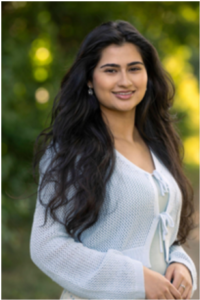
Hamna is a fourth-year medical student at Leiden University, and her nomination grew out of work that reaches across student leadership, healthcare information, and medical education.
"My work through IFMSA-Leiden and De Geneeskundestudent inspired my nomination," she explains. "I focused on making healthcare information, student leadership, and medical education more accessible and inclusive. Whether it was organizing an inclusive iftar that led to a €3,500 fundraiser or working on fairer selection procedures in medical education, my goal has always been the same: removing barriers so more people can participate and thrive."
That idea of removing barriers sits at the heart of how she thinks about fairness. "To me, equity means that your opportunities shouldn't depend on your background or the network you were born into," she says. "It's not just about giving everyone the same chance, but about removing the barriers that prevent people from reaching their potential."
Sofía
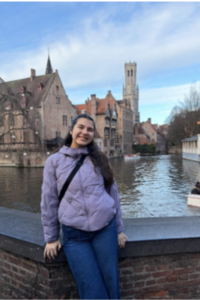
Sofía recently completed her Master's in Archaeological Science at the Faculty of Archaeology. As she puts it in her introduction: "I am 25 years old and originally from Chile, but have also lived in Mexico before coming to the Netherlands in 2019!"
Her work has centred on belonging and representation within the university. "My main initiative has always been to recognise the importance of proper representation," she says. "To make sure everyone feels welcome and that there is a space for everyone at the university."
For Sofía, an equitable society is one where every voice can be heard. "For me, creating an equitable society means opening spaces for all opinions," she reflects. "All perspectives can be of immense value in supporting new ideas and creating equal opportunities for everyone, no matter their background."
Homa
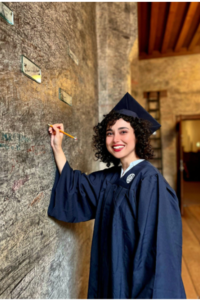
Homa Mirbagheri is a recent graduate of the Advanced Master's in International Relations and Diplomacy at Leiden University. "I'm a lawyer and former humanitarian worker from Iran," she writes, "and I'm passionate about advocating for refugees, women, and children through both my professional work and community volunteering."
Her nomination reflects a commitment built over years rather than a single project. "The work that inspired my ECHO Award nomination is not one single initiative but a commitment that has followed me throughout my career," she explains. "Before coming to the Netherlands, I worked as both a lawyer and a humanitarian professional with the Norwegian Refugee Council, supporting Afghan refugee communities in Iran. I also provided pro bono legal assistance to women navigating difficult divorce cases. In both roles, I met people whose voices were often missing from the conversations that shaped their lives."
Along the way, she came to see listening as central to the work. "The challenge was not only the practical barriers people faced but also the feeling of being unseen," she says. "I learned that listening carefully can be just as important as providing legal or humanitarian support. Helping someone understand their rights, access services, or simply feel heard can restore a sense of dignity and agency."
That commitment has continued since she arrived in the Netherlands. "Since moving to the Netherlands, I have continued this commitment by volunteering with children living in an asylum seekers' centre," she shares. "Together with other volunteers, we are creating a child-friendly space where children can play, learn, and simply enjoy being children despite the uncertainty they are experiencing. Although these may seem like small actions, they help create moments of safety, belonging, and hope. For me, social impact often begins with these everyday acts of care."
Her experience across two very different countries shapes her understanding of equity. "To me, creating a more equitable society means ensuring that people's opportunities are not determined by where they were born, their gender, or their circumstances," she says. "It means building communities where everyone feels safe, respected, and able to participate fully." She adds: "Having grown up in Iran and now living in the Netherlands, I have experienced very different realities. Those experiences have taught me how transformative it is when institutions earn people's trust and when individuals are treated with dignity. Equity is not only about changing laws or policies; it is also about listening, including different voices, and making sure people who are often overlooked know that they matter."
Sarah
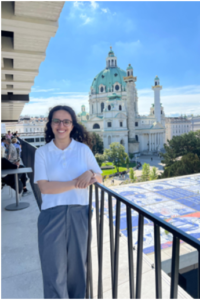
Sarah is a sixth-year medical student at Leiden University Medical Center (LUMC), with a strong interest in diversity and inclusion in medical education. "Through my work in curriculum development and student advocacy, I strive to make healthcare education more representative and inclusive," she says.
Her drive comes from her own experience as a student. "My work is rooted in a personal experience: growing up as a second-generation Moroccan-Dutch student, I often missed seeing people like myself represented in my medical education," she explains. "This inspired me to get involved in the impulse team Diversity & Inclusion at LUMC, where I screen the curriculum for representation and work with educators to make teaching more inclusive. Through De Geneeskundestudent, I also contributed to a nationwide guide for educators on integrating D&I into medical education. My goal is to turn the lack of representation I experienced into concrete change for future students."
For Sarah, equity is closely tied to a sense of belonging. "To me, equity means creating an environment where people do not have to question whether they belong," she reflects. "It means being seen and taken seriously, regardless of your background, and having equal opportunities to develop your potential. Sometimes that starts with something as simple as seeing yourself represented in a textbook or recognising yourself in someone standing in front of a classroom."
Adam
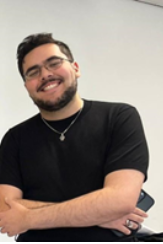
Adam is an MA student in Asian and Middle Eastern Studies. "With my project I am trying to call for more attention to the experiences and (hi)stories of Asian communities in the Netherlands," he writes.
His interest grew directly out of his studies. "I have always been interested in different migrant communities, and especially later generations, in the Netherlands," he explains. "Doing my MA in Asian Studies prompted me to think more about the experiences and position of Asian-Dutch people in the Netherlands and how their stories, while being very rich, varied and illustrative, have had astoundingly little academic attention. In the same vein, I also felt that our program paid little attention to Asian diasporas here, focusing rather on Asia as a distinct, other place. I got inspired to work on this theme, and find a way to stimulate more education and research on Asian-Dutch communities!"
Much of his work is about creating encounters between the university and the wider community. "I have been working on bringing staff and students together with civil society, and the wider community, to facilitate conversation and to learn what questions are important for respective communities," he says. "On September 24th I am organizing a screening of Meer dan Babi Pangang by Julie Ng with a panel discussion afterwards in which we dig deeper into the theme of Chinese-Dutch identities! Through facilitating encounters like these I hope to inspire collaboration, bringing together university and society. In terms of diversity, this contributes to a more diverse and representative university, both in terms of education and research!"
For Adam, equity is closely bound up with knowledge and who it serves. "It means equipping people of all backgrounds with the necessary knowledge to navigate life in society," he reflects. "I think the university's role in that could be to actively respond to the questions for knowledge that exist within communities. Finding answers to questions about identity, history, racism and more themes are not just interesting academically, but they generate knowledge that is directly useful and valuable to people to better understand who they are in our society. That awareness helps in creating a more just society."
Where to start?
We also asked each nominee the question so many students quietly ask themselves: what would you say to someone who wants to get involved in diversity, inclusion, or social impact but has no idea where to begin? Their answers, taken together, form something like a shared piece of advice.
For several of them, it starts with paying attention to what is right in front of you. "Start with what you notice around you," Hamna says. "If something feels unfair or exclusive, that's often where change begins. You don't need a leadership position to make an impact, small actions can grow into structural change. And don't wait until you see someone who looks like you in that role. Sometimes, you get to be that person for someone else."
Sarah offers a similar encouragement to begin close to home. "Start small and start with something you care about in your own environment," she says. "You don't need to have a big plan or a formal position to make a difference. Talking to people and sharing your ideas is where meaningful change often starts!"
Adam found that small, concrete steps helped him figure out what he actually wanted to do. "Over the course of my work, I have realized that attending that one event or emailing that one person has been so helpful in shaping my ideas and realizing what it actually is that I want to achieve, and how I can do that," he explains. "When you're not sure where to start, I think it can sometimes already be really helpful to just explore what is already being done, what sparks your interest and move from there."
Sofía points to a specific starting point that opened her own eyes. "I would definitely tell them to attend the diversity and inclusion symposium," she says. "I attended the very beginning of my term as a student member of my faculty's diversity committee, and it truly opened my eyes not only to the available services at Leiden but also to the deep-rooted issues that still need to be resolved within our community."
And Homa reminds us that consistency matters more than grand gestures. "You don't have to begin with a big project or wait until you feel fully qualified," she says. "Start by listening to your community and asking where help is needed, maybe even through a simple Google search to check volunteering opportunities. Sometimes the most meaningful contribution is simply showing up consistently, whether that means volunteering a few hours each week, sharing your skills, or giving someone your time and attention." As she puts it: "Real change is built through small, consistent actions. You may never know the full impact you have on someone's life, but even making one person feel seen, supported, or less alone is already worth it."
Five students, five very different paths, and one shared belief: that a fairer society is built through steady, everyday acts of care and attention. We are proud to see them nominated, and prouder still of the communities they are helping to build. To Hamna, Sofía, Homa, Sarah, and Adam, congratulations, and thank you.
Finalist
We are happy to announce that Homa Mirbagheri has been announced as a finalist for the ECHO Actualiteiten award. This award category was created in 2025 to allow the jury to recognize those candidates who especially play into the most important social developments in recent years. Homa Mirbagheri, along with the other finalists, will be meeting the jury on the 29th of October, after which they will decide on the winners. They will be announced during the awards ceremony in Amsterdam UMC on the 10th of December.


0 Comments